
Bow Handles
-
Monmouth Bow Handle
Regular price From £5.85Regular price -
Malvern Cabinet Bow Handles
Regular price From £8.95Regular price -
Brecon Cast Iron Cabinet Bow Handle - 128mm Centres
Regular price £4.95Regular price -
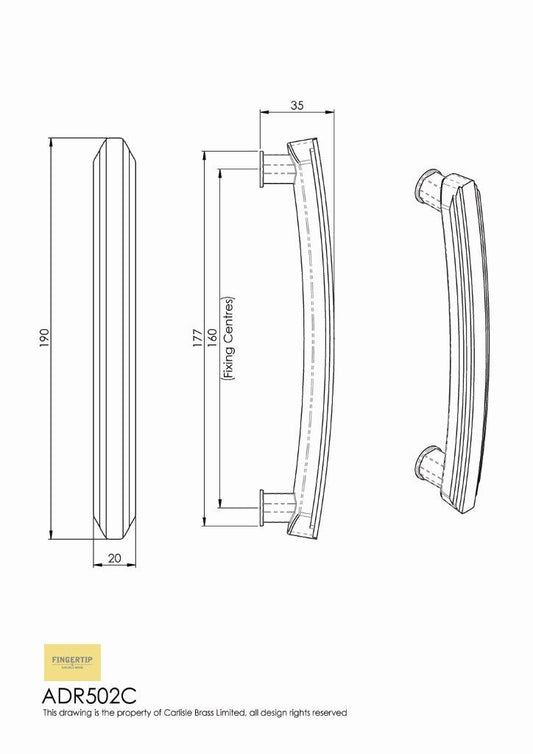
Art Deco Satin Nickel Cabinet Bar Handle - 160mm Centres
Regular price £13.95Regular price -
Brecon Matt Black Cabinet Bow Handle - 128mm Centres
Regular price £4.75Regular price -
Art Deco Polished Chrome Cabinet Bar Handle | 160mm Centres
Regular price £13.95Regular price -
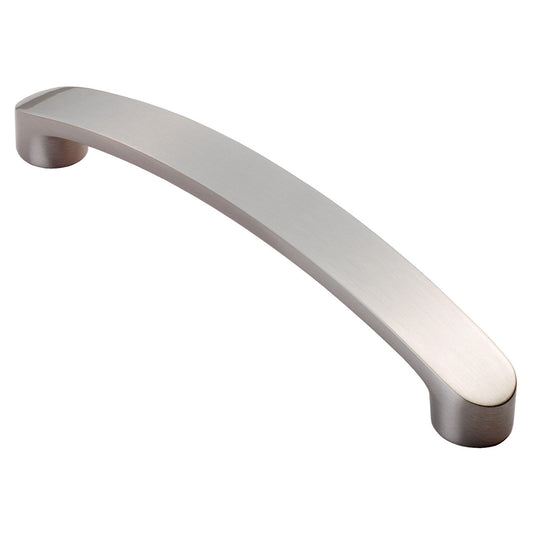
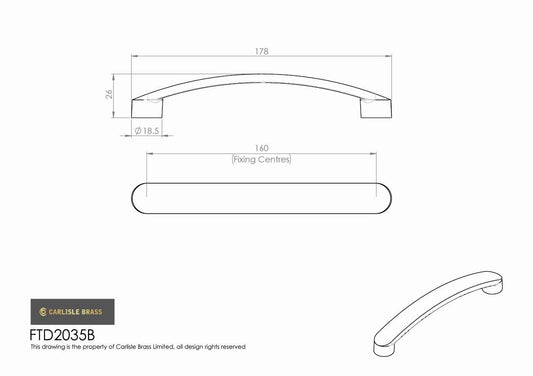
Fingertip Design Satin Nickel Bow Cabinet Handle - 160mm Centres
Regular price £4.95Regular price -
Fingertip Design Curva Satin Nickel Cabinet Bow Handle - 160mm Centres
Regular price £3.25Regular price -
Stainless Steel Finish Cabinet Bow Handle - 128mm Centres
Regular price £3.95Regular price -
Polished Chrome Cabinet Bow Handle - 128mm Centres
Regular price £3.95Regular price -
Arran Cast Iron Cabinet Bow Handle - 128mm Centres
Regular price £6.45Regular price -
Arran Cast Iron Cabinet Bow Handle - 96mm Centres
Regular price £5.75Regular price -
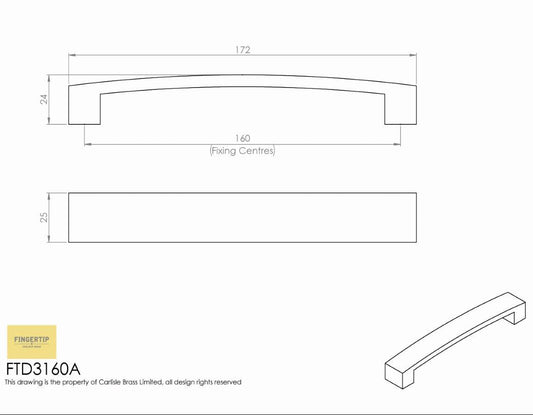
193mm Stainless Steel Finish Bow Cabinet Door Handle - 160mm Centres
Regular price £7.35Regular price -
Arran Cast Iron Cabinet Bow Handle - 160mm Centres
Regular price £7.95Regular price













Bow handles for cabinets and drawers
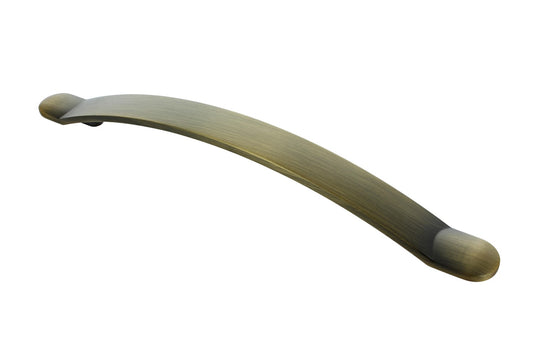
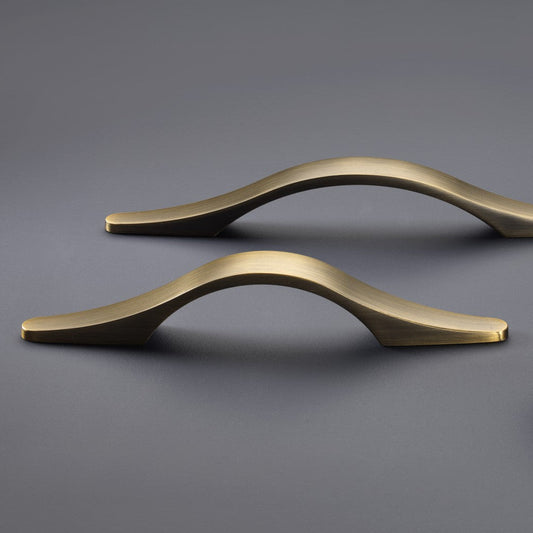
Bow handles are valued for their curved shape, which provides a comfortable grip while adding a softer visual detail to cabinetry. Their design makes them suitable for frequent use on cupboard doors and drawers, particularly in kitchens and furniture that sees daily wear.
Shorter bow handles suit compact cupboard doors and smaller drawers, while a longer curve can look more at home on wider drawer fronts and larger doors. The choice is as much about how the arc sits on the furniture as the fixing-centre measurement itself.
The defining feature is the gentle outward curve between the fixing points. That gives the fingers space to sit naturally behind the handle and creates a softer outline than a straight bar. For customers who want a practical pull without the more architectural look of a long linear handle, cabinet bow handles occupy a useful middle ground.
Bow handle styles
Bow handles offer a versatile design that sits between modern and traditional styles. Their gentle curve complements classic cabinetry while remaining subtle enough to suit contemporary interiors.
They are often chosen instead of straight bar handles when a softer outline suits the furniture better. The curve adds detail without making the fitting feel overly decorative, so the same style can work across both doors and drawers.
If you prefer a straighter, more linear pull, compare the designs in our bar handles collection.
Not all bow handles have the same character. A shallow curve can look restrained and contemporary, while a deeper arch creates a more traditional profile. The thickness of the handle, the shape of the ends and the finish all influence whether the design feels light and understated or more decorative.
Bow handle sizes and fixing centres
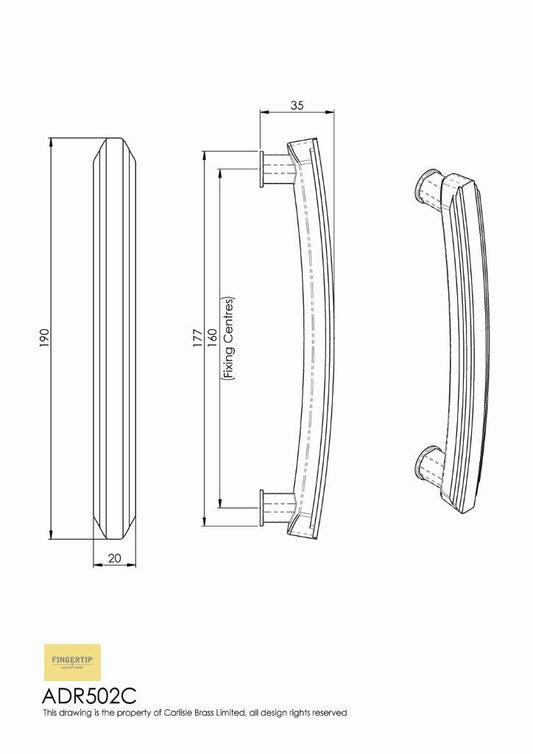
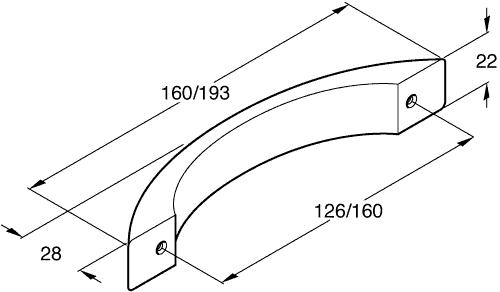
For replacement work, start with the fixing centres — the measurement between the two screw holes. This collection includes familiar sizes such as 96mm, 128mm and 160mm centres, so it is possible to change the look of a handle without necessarily changing the drilling.
If you are replacing existing cupboard or drawer handles, matching the fixing centres is the first step because it can allow the new handle to use the holes already drilled in the cabinet front. Overall length should still be checked as well. Two bow handles with identical fixing centres can have different curves and end shapes, so their total width and footprint may not be the same.
On new cabinetry, size is more about proportion. A compact bow handle can suit a narrow cupboard door or small drawer, while a longer handle usually sits more comfortably on a wide drawer or larger cabinet front. Our cabinet handle sizes guide explains fixing centres and proportions in more detail.
Bow handle finishes
The finish of your bow handles plays an important role in defining the overall look of your cabinetry. Dark finishes can add contrast to light cupboards, while warmer metallic tones introduce character and depth. Neutral finishes remain popular for their timeless appeal and versatility.
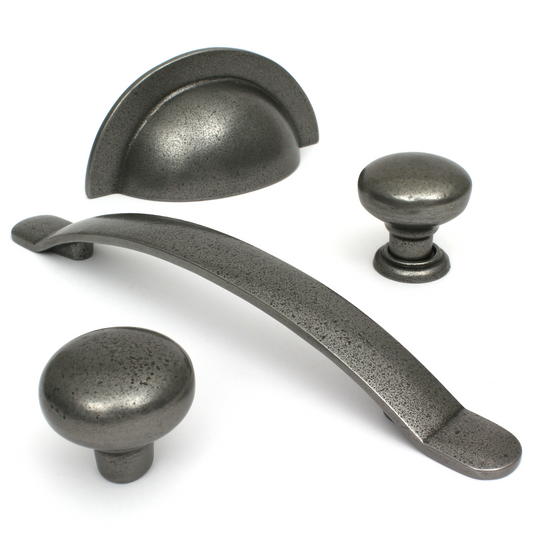
Our bow handles are available in a range of finishes, including black handles, brass cabinet handles, chrome handles, gunmetal handles, and pewter designs. Choosing a consistent finish across cupboards and drawers helps create a polished and coordinated appearance.
Finish also changes how strongly the curved profile is seen. Polished finishes catch more light across the arc of the handle, while matt and darker finishes tend to emphasise the silhouette. Antique and pewter-style finishes can give the same basic bow shape a more traditional or furniture-led character.
Bow handles for kitchens and furniture
In kitchens, the curved shape gives plenty of room for the fingers without adding the long straight line of a bar handle. It suits both cupboard doors and drawers, particularly where a softer profile feels more appropriate than a very architectural pull.
Beyond the kitchen, bow handles are also suitable for furniture such as sideboards, dressers, and storage units. For kitchen-specific options, you may wish to browse our dedicated kitchen door handles collection. For more general storage solutions, our cabinet handles range includes additional styles suitable for furniture throughout the home.
Bow handles can be particularly effective on dressers and freestanding furniture because the curved form adds detail without requiring a large backplate or heavily decorative fitting. On painted furniture they can provide contrast; on timber, a softer metallic or aged finish can sit more quietly with the grain.
Bow handles, bar handles or D handles?
Bow, bar and D handles can all provide a secure grip, but they create different visual effects. Bar handles are usually straighter and more linear, making them a natural choice where the hardware is intended to reinforce clean horizontal or vertical lines. D handles tend to have a compact, straightforward profile. Bow handles introduce more curvature and can soften the appearance of both modern and traditional cabinetry.
There is no need to choose by label alone. The cabinet proportions, the amount of projection, the shape of the grip and the overall room style are more useful considerations than whether a handle is described as bow, D or bar. Our guide to choosing cabinet handles compares the main handle types in more detail.
Choosing the right bow handles
When choosing a bow handle, look at how the curve sits on the door or drawer as well as how it feels in the hand. A handle that looks right on a small cupboard can appear lost on a broad drawer front, even if the fixing centres are technically suitable.
For replacement projects, check fixing centres before ordering and compare the overall dimensions if the previous handle has left marks on the cabinet front. For new installations, look at the room as a whole: repeating the same bow-handle family across doors and drawers usually creates a more coherent result than selecting each fitting in isolation.
Browse the collection to compare different curves, sizes and finishes for kitchens, furniture updates and new cabinetry.
Explore More Styles
-

Cup Handles
What Are Cup Cabinet Handles Our range of cup handles offers a...
-

Bar Handles
What Are Cabinet Bar Handles? Cabinet bar handles feature a straight, linear...
-

Cupboard Knobs
Cupboard knobs for cabinets and drawers For cupboards and smaller pieces of...
-

Knurled Cabinet Handles
What are knurled cabinet handles? Knurled cabinet handles are defined by their...


